In today’s digital world, fraudsters are becoming more advanced, more convincing and more aggressive in the way they target individuals, business owners, company directors, professionals and stakeholders. One of the most serious concerns is the misuse of trusted government names to create fear, urgency and confusion among people.
Recently, the Ministry of Corporate Affairs, commonly known as MCA, has issued an important public advisory warning stakeholders about fraudulent communications being made in the name of MCA officials and other government departments. These fake communications may come through phone calls, WhatsApp messages, emails, ZIP file attachments, phishing links or fake websites.
Fraudsters may also misuse the names of trusted institutions such as the Ministry of Corporate Affairs, the Reserve Bank of India, the Income Tax Department and other government departments to make their communication appear genuine. Their main objective is to deceive stakeholders and obtain confidential, financial or personal information.
This advisory is especially important for company owners, directors, accountants, compliance professionals, chartered accountants, company secretaries, business consultants and anyone who regularly deals with government filings, compliance or corporate documentation.
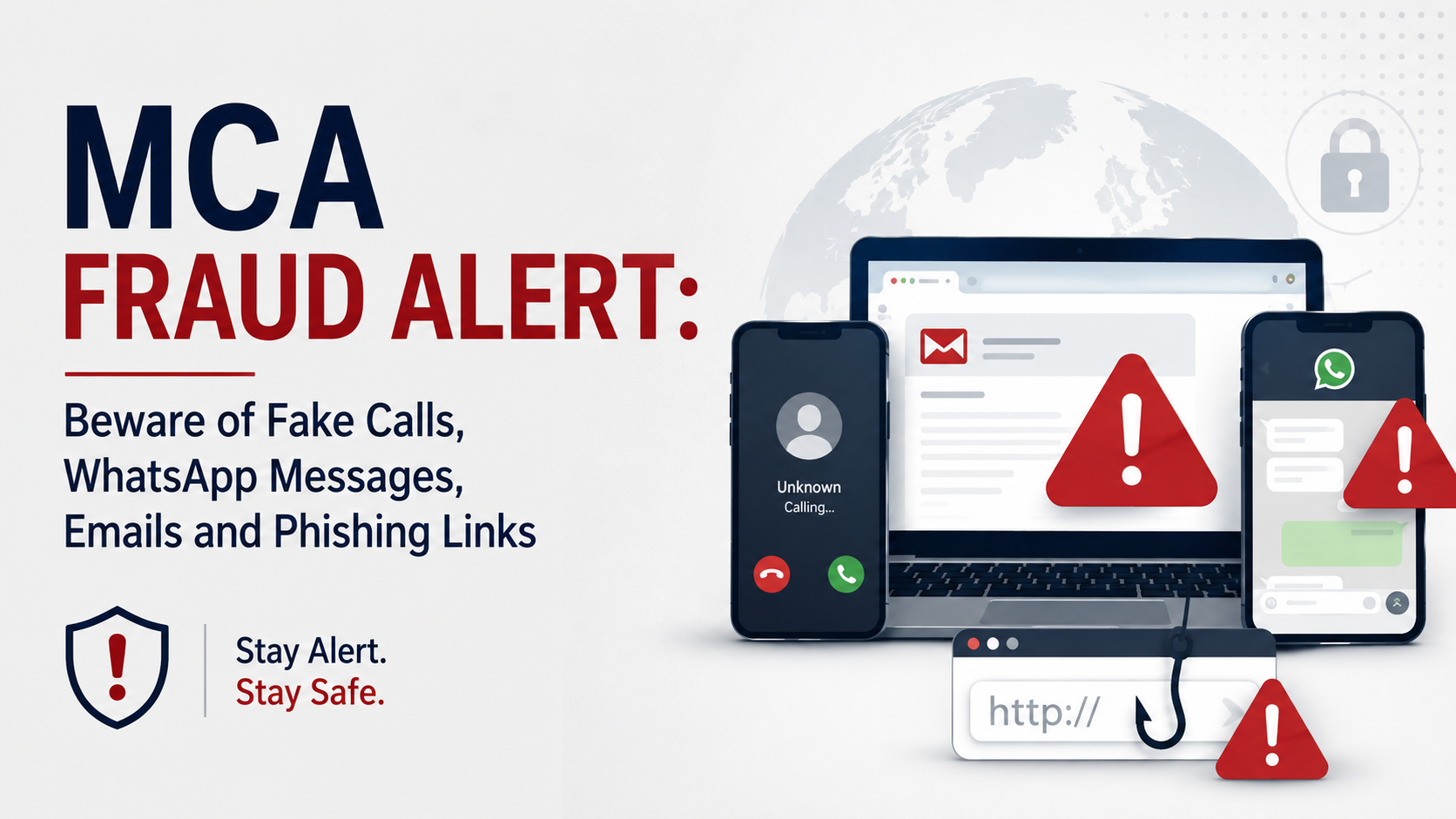
Why This MCA Fraud Alert Is Important
The Ministry of Corporate Affairs plays a very important role in company registration, corporate compliance, annual filings, director-related records, company master data and several other business-related services. Because MCA is directly connected with companies and business owners, fraudsters often misuse its name to create panic among stakeholders.
A fake message claiming to be from MCA can easily make a business owner worried. It may mention non-compliance, penalty, legal action, document verification, company filing issue or urgent account update. In such situations, many people may act quickly without verifying the authenticity of the communication.
This is exactly what fraudsters want.
They create pressure and urgency so that the recipient clicks on a suspicious link, downloads a harmful attachment, shares login credentials, provides financial information or makes a payment without proper verification.
The MCA advisory clearly reminds stakeholders to stay cautious and not trust any unverified communication received through mobile calls, WhatsApp messages, emails or fake websites.
Common Types of Fraudulent Communications
Fraudulent communications can appear in many forms. Some may look simple and obvious, while others may look highly professional and official. Stakeholders should be aware of the most common forms of such fraud.
Fake Phone Calls Impersonating MCA Officials
Fraudsters may call business owners or company representatives and introduce themselves as MCA officials. They may claim that the company has missed an important compliance deadline or that legal action will be taken if immediate action is not taken.
In many cases, such callers use fear-based language. They may ask for company details, director details, OTP, payment information or login credentials. Some may also ask the recipient to download an application or share screen access.
It is important to remember that MCA does not contact stakeholders through mobile calls regarding non-compliance or enforcement actions. Any such call should be treated with caution.
Fake WhatsApp Messages
WhatsApp has become one of the easiest channels for fraudsters to target people. A fake WhatsApp message may include the MCA name, government symbols, official-looking text or urgent instructions.
The message may ask the recipient to click on a link, download a file, verify company details or make an immediate payment. Some messages may also include threats of penalty, company strike-off, legal notice or account suspension.
Stakeholders should understand that MCA does not use WhatsApp to communicate non-compliance or enforcement actions. Any WhatsApp message claiming to be from MCA should be verified only through official channels.
Fake Emails
Fraudulent emails are one of the most common methods used by cyber criminals. These emails may look professional and may include subject lines related to compliance, company verification, penalty notice, director KYC, filing status or government update.
Some fake emails may contain attachments, ZIP files or links to fake portals. Once opened, these attachments may install malware or steal information from the user’s system.
Before opening any email related to MCA or any government department, users should carefully check the sender email address, official domain, message language, attachments and links. Suspicious emails should not be opened or replied to.
ZIP File Attachments and Harmful Downloads
The MCA advisory specifically warns stakeholders not to open unsolicited ZIP files or attachments. ZIP files are often used by fraudsters to hide harmful files. Once downloaded or extracted, such files may infect the system, steal data or give unauthorized access to cyber criminals.
Business owners and professionals should be extra careful because their systems may contain sensitive company records, financial documents, client information, digital signatures and login details.
No unsolicited attachment should be opened unless its source is verified.
Phishing Messages and Suspicious Links
Phishing is a common cyber fraud method where criminals create fake links or websites that look similar to official portals. These links may be sent through email, WhatsApp, SMS or social media.
A phishing link may take the user to a fake MCA-like website where they are asked to enter login ID, password, OTP, company details, PAN, Aadhaar, bank details or payment information.
Once the information is entered, it goes directly to the fraudsters.
Stakeholders should never click on suspicious links. If any MCA-related action is required, users should visit the official MCA website directly by typing the correct website address in the browser.
Fake Websites Impersonating Government Portals
Fraudsters may create fake websites that look similar to government portals. These websites may use similar colors, logos, layouts or names to confuse users.
Some fake websites may claim to offer MCA filing, compliance verification, penalty removal, company status update or document correction. They may ask users to upload documents or make payments.
Always verify the website URL carefully. Genuine MCA-related information should be checked only through the official MCA website.
MCA Does Not Contact Stakeholders Through WhatsApp or Mobile Calls for Enforcement Actions
One of the most important points in the advisory is that MCA does not contact stakeholders through mobile calls or WhatsApp regarding non-compliance or enforcement actions.
This is a critical reminder for all business owners and company representatives.
If someone calls or messages you on WhatsApp claiming to be from MCA and says that your company is facing enforcement action, penalty or compliance issue, do not panic. Do not share any information. Do not make any payment. Do not click on any link.
Instead, verify the matter through the official MCA website or raise a ticket through the MCA Helpdesk if the communication is related to MCA services.
What Stakeholders Should Not Do
Stakeholders should avoid taking quick action based on fear or urgency. Fraudsters often use pressure tactics to force people into making mistakes.
- Do not click on suspicious links received through WhatsApp, SMS or email.
- Do not open unsolicited ZIP files or unknown attachments.
- Do not share confidential company information through unverified channels.
- Do not provide OTP, password, user ID, PAN, Aadhaar, bank details or digital signature details to anyone over phone, WhatsApp or email.
- Do not make payments based on unofficial messages or calls.
- Do not trust caller ID, profile photo, logo or official-looking text without verification.
- Do not download any software or application suggested by an unknown caller.
- Do not allow remote access or screen sharing to unknown people.
- Do not reply to suspicious emails or messages.
These simple precautions can protect individuals and businesses from major financial and data-related losses.
How to Verify Genuine MCA Communication
If you receive any communication claiming to be from MCA, the first step is verification. Do not act immediately based on the message alone.
Visit the official MCA website and check whether any update, notice or action is actually visible in the official records.
Use only the official MCA portal for company-related information, filing status, compliance details and official services.
If the communication is related to MCA services and you are still unsure, you may raise a ticket through the MCA Helpdesk for proper assistance.
Never rely on links provided in suspicious emails or WhatsApp messages. Always open the official website manually.
Where to Report Suspicious Communication
If you receive any suspicious message, fake call, phishing email, fraudulent attachment or fake website link, you should report it through the National Cyber Crime Reporting Portal.
Reporting such incidents is important because it helps authorities track fraud networks and prevent other people from becoming victims.
Businesses should also internally document such incidents and inform their finance, compliance and administrative teams so that no one from the organization responds to the fraudster by mistake.
Why Business Owners Need Extra Caution
Business owners are one of the primary targets for such frauds because they often deal with multiple compliance requirements, government portals, tax filings, company registrations and financial transactions.
Fraudsters know that company owners may get worried if they receive a message about penalty, non-compliance, ROC issue, director KYC problem or company status warning. This fear can make them act quickly without proper verification.
That is why every business owner should create a basic verification process.
Any government-related message should be checked by the responsible professional before action is taken. Accountants, company secretaries, legal consultants and directors should coordinate before responding to any suspicious communication.
Importance for Directors and Compliance Teams
Company directors and compliance teams should be especially alert. Many fraud messages may directly mention company compliance, director verification, digital signature update, DIN, ROC filing or MCA portal login.
If a fraudster gains access to sensitive company data, it can create serious problems. They may misuse documents, access accounts, create financial fraud or attempt identity theft.
Compliance teams should ensure that MCA login credentials, DSC details, company documents and director information are handled only through verified systems and trusted professionals.
Cyber Safety Tips for Companies
Companies should educate their employees and partners about cyber fraud prevention. A simple awareness message can prevent a major fraud.
All team members should know that government departments do not usually ask for confidential information through random calls or WhatsApp messages.
Organizations should use official email IDs for compliance communication.
Important passwords should be changed regularly.
Two-factor authentication should be enabled wherever possible.
Sensitive documents should not be shared on unverified links or unknown email addresses.
Suspicious files should not be downloaded on office systems.
Employees should be trained to report suspicious messages immediately.
A proper internal approval process should be followed before making any payment related to compliance, government filing or legal notice.
Red Flags That Indicate a Possible Fraud
- There are some common warning signs that can help you identify fraudulent communication.
- The message creates unnecessary urgency.
- The sender threatens immediate penalty or legal action.
- The message asks you to click on a short or suspicious link.
- The email address does not look official.
- The message contains spelling mistakes or unusual formatting.
- The sender asks for OTP, password or payment details.
- The caller refuses to share proper official verification.
- The website URL looks slightly different from the official website.
- The message asks you to download a ZIP file.
- The caller asks for screen sharing or remote access.
- The communication comes through WhatsApp for serious compliance or enforcement matters.
- If you notice any of these signs, do not proceed without verification.
Do Not Panic, Verify First
Fraudsters depend on panic. They want the recipient to feel scared and take immediate action. But genuine government-related processes can always be verified through official sources.
If you receive a suspicious message in the name of MCA, stay calm. Do not respond immediately. Do not click on any link. Do not share information.
Take a screenshot if needed, save the details and verify through the official MCA website. If required, report it through the National Cyber Crime Reporting Portal.
Role of Digital Awareness
Digital awareness is no longer optional. Every individual and business using online services must understand basic cyber safety practices.
Government impersonation fraud is increasing because people naturally trust official names. Fraudsters misuse this trust. They use professional-looking messages, official terminology and fear-based communication to deceive people.
By staying aware, verifying sources and avoiding suspicious links, stakeholders can protect themselves from such frauds.
Final Thoughts
The MCA fraud alert is an important reminder for all stakeholders to remain careful while dealing with any communication related to government departments. Fake calls, WhatsApp messages, emails, ZIP attachments, phishing links and fake websites can cause serious financial and data-related harm.
The safest approach is simple: do not trust unverified communication, do not click on suspicious links, do not open unknown attachments and do not share confidential information through WhatsApp, email or phone calls.
Always verify MCA-related communication only through the official MCA website. For suspicious cyber activity, report the matter through the National Cyber Crime Reporting Portal. If the matter relates to MCA services, raise a ticket through the MCA Helpdesk for proper assistance.
Being alert today can protect your business, your data and your financial security tomorrow.
Need Digital Safety Awareness and Guidance?
Sweksha.com regularly shares useful information, awareness content and guidance to help individuals, businesses and professionals stay informed in the digital world.
Stay aware. Stay alert. Trust only verified sources.