In today’s fast-paced world, many people are looking for ways to create more balance, calmness, and positivity in their daily lives. Alongside meditation, yoga, mindfulness, and other wellness practices, crystal healing has gained attention as a spiritual wellness practice.
Crystal healing is based on the belief that certain crystals and gemstones can be used as symbolic or spiritual tools to support relaxation, intention-setting, meditation, and emotional well-being. Different crystals are traditionally associated with different qualities, such as peace, protection, love, confidence, grounding, and clarity.
While crystal healing should not be considered a replacement for professional medical or psychological care, many people incorporate crystals into their personal wellness routines as a complementary spiritual practice.
In this blog, we will explore what crystal healing means, how crystals are traditionally used, popular crystals and their spiritual associations, ways to include crystals in daily wellness practices, and important things to know before beginning.
What Is Crystal Healing?
Crystal healing is a spiritual and wellness practice that involves using natural crystals or gemstones during meditation, relaxation, intention-setting, energy-focused practices, or personal rituals.
Practitioners and followers of crystal healing often believe that crystals have particular energetic qualities. Each crystal may be associated with specific intentions or aspects of spiritual wellness.
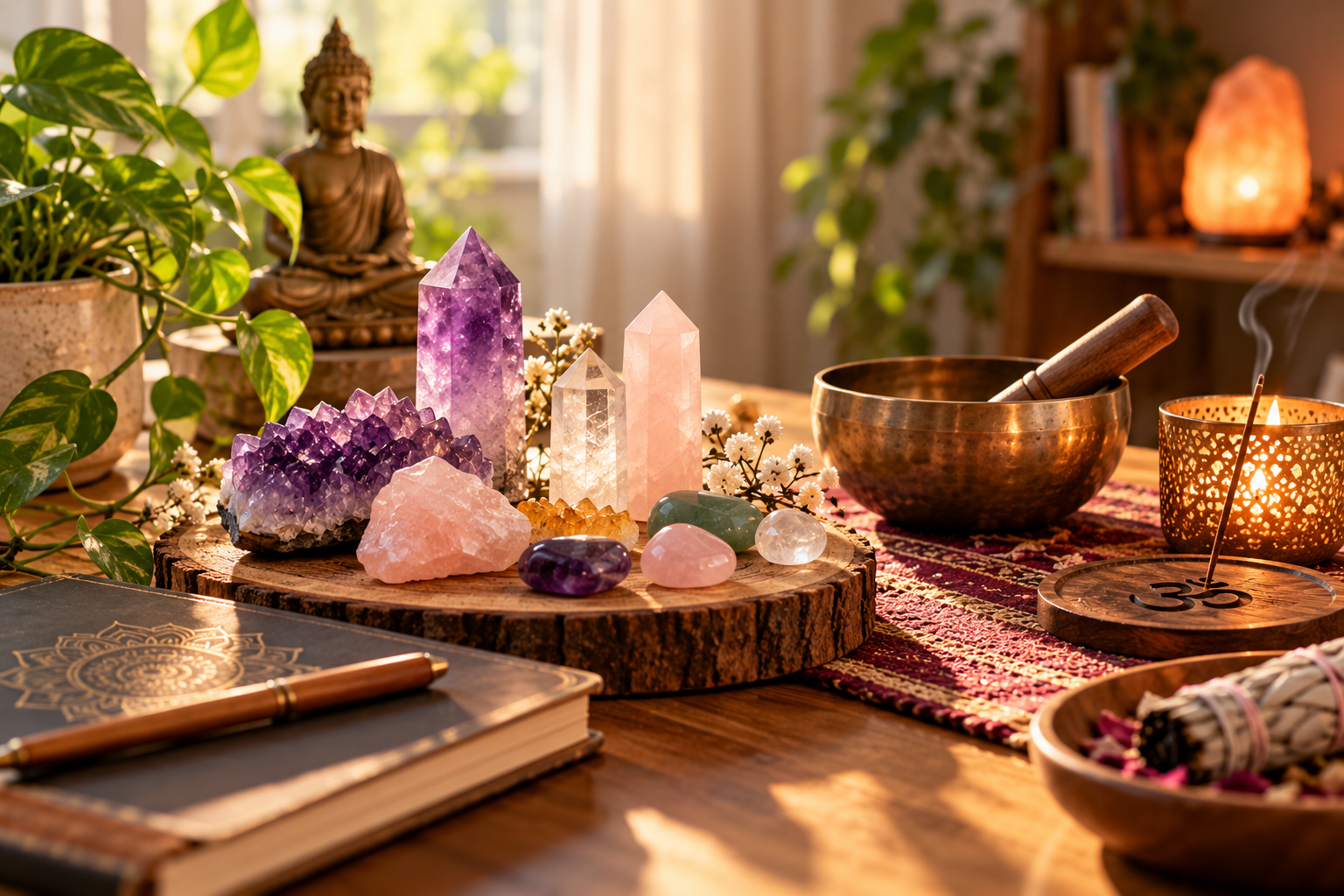
For example, some people use amethyst during meditation because they associate it with calmness and spiritual awareness. Rose quartz is commonly connected with love and compassion, while clear quartz is often associated with clarity and intention.
The experience can be highly personal. For some people, crystals become meaningful objects that help them slow down, focus their thoughts, and create a dedicated moment for self-reflection.
How Does Crystal Healing Work?
The concept of crystal healing is rooted in spiritual and traditional beliefs rather than established medical science. There is currently no strong scientific evidence that crystals can directly heal diseases or alter the body’s energy fields in the way some spiritual traditions describe.
However, the practice can still have a meaningful place in a person’s wellness routine.
Holding a crystal during meditation, placing it near a personal workspace, or using it as a reminder of a particular intention can encourage mindfulness. The crystal itself can become a physical symbol of the emotional or spiritual quality a person wants to cultivate.
For example, someone who wants to develop greater calmness may use a particular crystal as a reminder to pause, breathe, and reconnect with themselves.
This symbolic and mindfulness-based approach can make crystal practices meaningful without making unsupported medical claims.
Why Are Crystals Used in Spiritual Wellness?
Crystals are often used in spiritual wellness because they can provide a tangible focus for personal practices.
Unlike abstract intentions, a physical crystal can be held, carried, placed on a meditation space, or kept somewhere visible. This can make it easier to establish a consistent wellness ritual.
Common reasons people explore crystal healing include:
- Supporting meditation and mindfulness
- Creating a relaxing personal environment
- Focusing on personal intentions
- Encouraging self-reflection
- Developing a spiritual routine
- Creating reminders of positive goals
- Supporting emotional awareness
- Practicing relaxation and grounding
The meaning attached to a crystal often depends on the individual’s beliefs, experiences, and intentions.
Popular Crystals and Their Traditional Spiritual Associations
There are many types of crystals available, and different spiritual traditions associate them with different qualities.
1. Amethyst
Amethyst is one of the most popular crystals used in spiritual wellness.
It is traditionally associated with calmness, meditation, intuition, and spiritual awareness. Many people keep amethyst near their meditation space or use it during quiet reflection.
Its purple color also makes it a popular decorative crystal for homes and wellness spaces.
2. Rose Quartz
Rose quartz is commonly known as a crystal associated with love, compassion, kindness, and emotional softness.
People may use rose quartz when focusing on self-love, relationships, emotional healing, or developing a more compassionate attitude toward themselves and others.
Some people keep rose quartz in their bedroom, meditation area, or personal space as a reminder of emotional balance and positive relationships.
3. Clear Quartz
Clear quartz is often associated with clarity, focus, intention, and spiritual practices.
Because of its transparent appearance, it is sometimes viewed symbolically as a crystal connected with clarity and purification.
People may use clear quartz during meditation or intention-setting practices.
4. Black Tourmaline
Black tourmaline is traditionally associated with grounding and protection.
People who feel overwhelmed by their surroundings sometimes use it as a symbolic reminder to maintain personal boundaries and stay grounded.
It is commonly placed near entrances, workspaces, or meditation areas.
5. Citrine
Citrine is often connected with positivity, confidence, abundance, motivation, and personal growth.
Its bright yellow-golden appearance makes it particularly popular among people who want to create an uplifting atmosphere.
Some people use citrine while setting goals related to personal development, creativity, or professional growth.
6. Selenite
Selenite is commonly used in spiritual practices involving meditation, cleansing rituals, and peaceful environments.
It is often associated with clarity and spiritual calmness.
Because selenite is relatively soft, it should be handled carefully and kept away from prolonged exposure to water.
7. Carnelian
Carnelian is traditionally associated with motivation, creativity, courage, and confidence.
It may be used during goal-setting or creative practices when a person wants a physical reminder to take action and stay motivated.
8. Labradorite
Labradorite is often associated with intuition, transformation, and spiritual exploration.
Its distinctive color flashes make it visually unique, and many people incorporate it into meditation or personal spiritual practices.
How Are Crystals Used in Meditation?
One of the simplest ways to incorporate crystals into spiritual wellness is through meditation.
A person can sit comfortably, hold a crystal in their hand, close their eyes, and focus on their breathing.
The crystal can be used as an anchor for attention.
For example, instead of allowing the mind to move constantly between thoughts, a person can gently return their attention to the sensation of holding the crystal and the rhythm of their breathing.
A simple crystal meditation may involve:
- Choosing a crystal that represents your intention.
- Sitting somewhere quiet and comfortable.
- Holding the crystal gently.
- Taking slow and comfortable breaths.
- Focusing on your intention.
- Observing thoughts without becoming attached to them.
- Spending a few minutes in quiet reflection.
- Ending the practice slowly and mindfully.
The goal is not necessarily to achieve a supernatural result. The practice can simply provide a structured opportunity to pause and reconnect with yourself.
Crystal Healing and Chakra Practices
Crystal healing is also frequently discussed alongside chakra practices.
In some spiritual traditions, chakras are described as energy centers associated with different aspects of physical, emotional, and spiritual experience.
Different crystals are traditionally connected with particular chakras based on their color or spiritual symbolism.
For example:
- Amethyst is often associated with the crown or third-eye chakra.
- Clear quartz may be associated with multiple chakra practices.
- Rose quartz is commonly connected with the heart chakra.
- Citrine is often associated with the solar plexus chakra.
- Carnelian is traditionally linked with the sacral chakra.
- Black tourmaline is commonly used in grounding practices.
Chakra and crystal practices are spiritual traditions rather than scientifically established medical treatments. People may nevertheless find them useful as frameworks for meditation, reflection, and intention-setting.
How to Choose the Right Crystal?
Choosing a crystal does not have to be complicated.
You can begin by thinking about what you want to focus on in your wellness practice.
For example:
For calmness and meditation:
Amethyst may be a meaningful choice.
For love and compassion:
Rose quartz is traditionally associated with these qualities.
For grounding:
Black tourmaline is commonly used symbolically for grounding and protection.
For confidence and motivation:
Carnelian or citrine may appeal to people focusing on these intentions.
For clarity and focus:
Clear quartz is often selected for intention-setting and meditation.
You can also simply choose a crystal that you feel naturally drawn to. Its appearance, color, texture, or personal meaning may be enough to make it valuable to your practice.
How to Use Crystals in Everyday Life
Crystal wellness does not have to involve elaborate rituals.
There are many simple ways to incorporate crystals into daily routines.
Keep a Crystal on Your Desk
Keeping a crystal on your desk can serve as a visual reminder to stay focused, calm, or positive during work.
Carry a Small Crystal
Some people carry a small crystal in a pocket or bag. It can serve as a personal reminder of an intention throughout the day.
Use Crystals During Journaling
Place a crystal beside your journal while writing about your thoughts, emotions, goals, or experiences.
This can help create a dedicated atmosphere for reflection.
Create a Meditation Corner
A small meditation space can include crystals, candles, plants, a comfortable cushion, or other objects that help you feel relaxed.
Use Crystals During Breathwork
Holding a crystal while practicing slow breathing can provide a tactile point of focus.
Crystal Cleansing: What Does It Mean?
Crystal cleansing is a practice commonly found in crystal spirituality.
People who follow crystal traditions may believe that crystals can absorb or hold energetic influences and therefore should be cleansed periodically.
Different traditions recommend different methods, including:
- Moonlight
- Sound
- Meditation
- Smoke cleansing
- Visualization
- Placing crystals near other cleansing stones
However, not every crystal is suitable for every cleansing method.
For example, some minerals can be damaged by water or prolonged sunlight. Therefore, it is important to understand the physical properties of a particular crystal before using water, salt, or direct sunlight.
If you are unsure, a dry and gentle method is generally safer for the physical stone.
Crystal Charging and Intention Setting
Another common practice is crystal charging.
In spiritual traditions, charging usually means intentionally dedicating a crystal to a particular purpose.
For example, a person may hold a crystal and mentally establish an intention such as:
“I want to create more calmness in my daily life.”
The crystal then becomes a physical reminder of that intention.
This practice can be viewed as a mindfulness exercise rather than a scientifically proven method of transferring energy.
Can Crystal Healing Reduce Stress?
Crystal healing itself has not been scientifically established as a treatment for stress or anxiety.
However, activities commonly performed alongside crystal practices, such as meditation, deep breathing, journaling, quiet reflection, and creating a peaceful environment, may support relaxation and mindfulness.
For someone who enjoys spiritual wellness, crystals can therefore become part of a broader self-care routine.
If stress or anxiety is severe, persistent, or affecting daily life, professional medical or mental health support should be considered rather than relying solely on crystals.
Crystal Healing vs. Medical Treatment
It is important to understand the difference between spiritual wellness and healthcare.
Crystal healing should not be used as a substitute for:
- Medical diagnosis
- Prescribed medication
- Psychological treatment
- Emergency medical care
- Professional mental health support
Crystals can be used as complementary spiritual or mindfulness tools, but they should not replace evidence-based treatment.
A balanced approach allows people to explore spiritual practices while still taking appropriate care of their physical and mental health.
Benefits People Commonly Associate With Crystal Practices
Although these benefits are based largely on personal experience and spiritual beliefs rather than scientific evidence, people commonly associate crystal practices with:
Greater Mindfulness
Using a crystal during meditation can help create a physical focus point.
Emotional Reflection
Crystals may become part of journaling or self-reflection rituals.
Personal Intentions
A crystal can act as a reminder of a goal or quality that someone wants to cultivate.
Relaxation
The ritual of sitting quietly, breathing, and focusing attention can encourage a more peaceful routine.
Spiritual Connection
For people who follow spiritual practices, crystals may become part of their broader approach to meditation and personal growth.
Creating a Simple Crystal Wellness Routine
If you are new to crystal healing, you do not need to buy a large collection of crystals.
Start with one crystal that represents an intention you want to explore.
Spend five to ten minutes each day sitting quietly with it. Focus on your breathing and think about your intention.
You can also maintain a journal and write down how you feel before and after your practice.
Over time, this can help you understand whether crystal-based mindfulness fits naturally into your personal wellness routine.
Common Mistakes Beginners Should Avoid
People who are new to crystal healing can sometimes feel pressured to buy many different stones or follow complicated rituals.
That is not necessary.
Avoid believing that you need an expensive collection of crystals to experience spiritual wellness.
It is also important to be cautious about claims that a particular crystal can cure serious diseases, guarantee financial success, remove every negative situation, or replace professional treatment.
Crystal practices are most useful when approached thoughtfully, realistically, and according to your personal beliefs.
Frequently Asked Questions About Crystal Healing
What is crystal healing?
Crystal healing is a spiritual wellness practice involving crystals and gemstones during meditation, intention-setting, relaxation, and other personal rituals.
Is crystal healing scientifically proven?
There is not strong scientific evidence that crystals possess healing energies capable of treating diseases. Many people use crystals as symbolic tools within meditation and spiritual wellness practices.
Which crystal is best for beginners?
There is no single “best” crystal for everyone. Amethyst, rose quartz, clear quartz, and black tourmaline are popular starting choices because of their common spiritual associations.
Can I sleep with crystals?
Some people keep crystals near their bed as part of their spiritual routine. However, the choice depends on personal comfort and belief. There is no scientific evidence that sleeping with a particular crystal provides medical benefits.
How often should crystals be cleansed?
There is no scientifically established schedule. People who follow crystal traditions may cleanse them whenever they feel it is appropriate or after using them during particular rituals.
Can crystals replace medical treatment?
No. Crystals should not replace medical treatment, prescribed medication, or professional psychological care.
How many crystals should I have?
There is no required number. One meaningful crystal can be enough to begin a personal wellness practice.
Crystal healing can be understood as a spiritual wellness practice that combines natural stones with meditation, intention-setting, reflection, and personal rituals.
While claims about crystal energy and physical healing are not scientifically established, crystals can still hold personal and symbolic value for people who enjoy spiritual practices.
The most important part of any wellness routine is finding practices that encourage healthy habits, self-awareness, relaxation, and positive personal growth.
Whether you choose amethyst for meditation, rose quartz as a symbol of compassion, clear quartz for intention-setting, or another crystal that personally resonates with you, approach the practice with an open but balanced mindset.
Crystal wellness does not need to be complicated. Sometimes, simply taking a few quiet minutes to breathe, reflect, and reconnect with yourself can be a meaningful step toward greater mindfulness.
Connect with Dr. Deipti Garg today